Our monthly economic review is intended to provide background to recent developments in investment markets as well as to give an indication of how some key issues could impact in the future.
It is not intended that individual investment decisions should be taken based on this information; we are always ready to discuss your individual requirements. We hope you will find this review to be of interest.
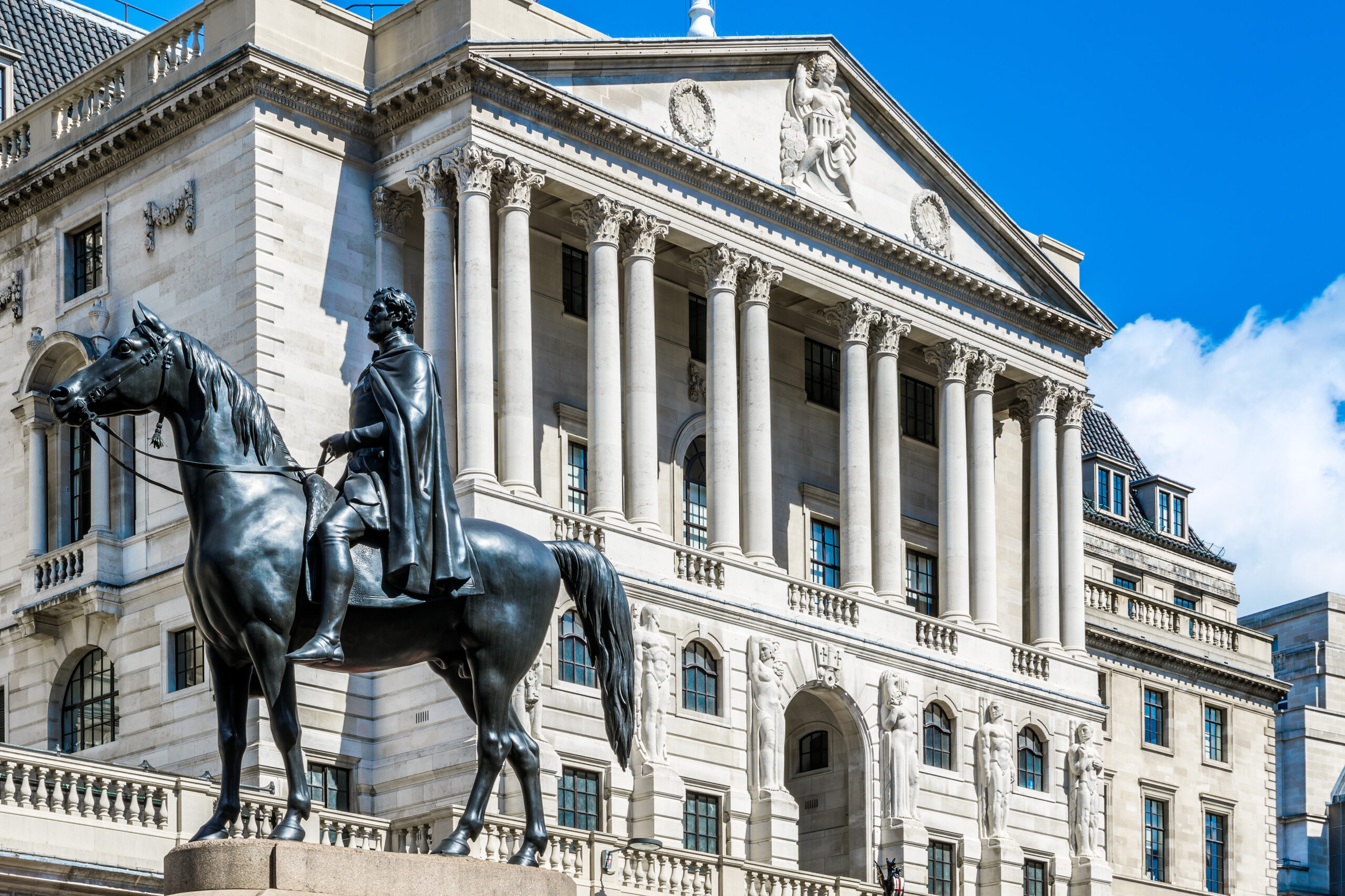
The Bank of England’s (BoE’s) Monetary Policy Committee (MPC) voted six to three in favour of leaving Bank Rate unchanged at 3.75% at its meeting on 30 July, with policymakers indicating rates could rise if inflationary pressures linked to the Middle East conflict intensify.
BoE Governor Andrew Bailey said, “Inflation has fallen faster than we’d expected, but the conflict in the Middle East continues to mean high and volatile energy prices. That will cause inflation to rise again later this year. However the conflict unfolds, our job is to make sure any increase in inflation is temporary and that it comes back to our 2% target.”
The decision comes as the new government looks to balance easing inflation against growing uncertainty in the global economic outlook ahead of the Budget on 28 October. Recent public-finance figures have provided some encouragement, although the government’s fiscal position remains challenging.
Government borrowing, the difference between public spending and tax income, totalled £16bn in June. This was £7.9bn lower than a year earlier and slightly below the £16.3bn forecast by the Office for Budget Responsibility (OBR). Borrowing for the financial year to date reached £57.6bn. Although this was £3.7bn below the same period last year, it remained £2.7bn higher than the official forecast. The Office for National Statistics (ONS) also noted that total government debt remained high by historical standards and is close to the annual value of the UK economy.
Separate labour-market data provided a similar mixed picture. with unemployment unchanged and ONS describing conditions as ‘relatively steady.’ Together, the figures support expectations that the BoE will keep rates on hold while assessing whether inflation continues to ease without a more significant slowdown in growth or employment. A recent Reuters poll of economists suggested rates are likely to remain unchanged for an extended period, with most respondents not expecting any move before mid-2027.
UK inflation fell by more than expected in June, providing some welcome relief for households. However, economists continue to warn that higher energy bills and geopolitical uncertainty could push inflation higher again later this year.
The Consumer Prices Index (CPI) rose by 2.6% in the year to June, down from 2.8% in May and its lowest rate since March 2025. The figure was also below the 2.7% forecast by economists surveyed by Reuters. Despite the improvement, inflation remains above the BoE’s 2% target, while underlying price pressures persist. Core inflation, which excludes food and energy costs, was unchanged at 2.6%.
According to ONS, lower motor fuel prices were the largest contributor to the fall in inflation, following a decline in oil prices after a ceasefire in the Middle East. Clothing discounts, together with lower transport and food costs, also helped reduce price pressures. Supermarket price inflation slowed to its lowest rate in almost two years, although some products, including meat, beef and vegetables, remained more expensive.
While the latest figures are encouraging, economists caution that the improvement may be temporary. The National Institute of Economic and Social Research (NIESR) has warned that renewed increases in global energy prices and ongoing geopolitical tensions could lead to higher inflation in the second half of the year, with developments in the Middle East continuing to cloud the outlook.
Prime Minister Andy Burnham has pledged to ease living costs, announcing a £2 bus-fare cap in England and the removal of VAT from household electricity bills from October. He has also pledged to deliver support measures while maintaining existing fiscal rules and avoiding higher taxes on working people. Although the latest inflation data provides a boost for the new government, policymakers are likely to remain cautious as inflation risks persist.
UK consumer confidence saw its biggest monthly rise for nearly three years in July, helped by optimism about the new government, warm weather and the FIFA World Cup.
GfK’s Overall Index Score increased by six points to -17, its largest monthly improvement since November 2023. Nevertheless, confidence has been in negative territory for more than a decade, due to years of high inflation and cost of living pressures.
Confidence in the UK economy over the year rose by 10 points to -39, while expectations for the coming 12 months increased eight points to -28. The survey was carried out between 1-14 July, before Andy Burnham took office, meaning the responses reflected expectations about the Prime Minister more than reactions to government policies.
Neil Bellamy, Consumer Insights Director at GfK, described it as “a wave of optimism”, adding: “The sense of a fresh start following the appointment of a new Prime Minister surely accounts for some of this bounce.” Bellamy said that hopes of a resolution to the Middle East conflict, lower fuel prices and the World Cup had also supported sentiment. Consumers also appeared more willing to spend, with GfK’s Major Purchase Index climbing eight points to -12.
"GfK’s Overall Index Score increased by six points to -17, its largest monthly improvement since November 2023"
Small-business confidence has fallen to a record low, increasing pressure on the government to tackle costs, business rates and late payments
The latest Small Business Index from the Federation of Small Businesses (FSB) found just 18% of small firms expect to grow in the next 12 months. By contrast, 32% expect to shrink, sell or close, producing a record net balance of -14%. Just 22% of businesses reported higher revenue during the second quarter of 2026, compared with 55% whose takings fell. Firms cited the domestic economy (64%), the tax burden (40%) and labour costs (33%) as the main barriers to growth. FSB Policy Chair Tina McKenzie said, “We cannot and must not accept a ‘new normal’ where more small firms believe they will shrink, sell up, or close entirely than anticipate growing over the next year.”
In an effort to turn the tide, the government announced a 20% business-rates reduction for pubs, clubs and live-music venues in England from April 2027, as well as plans to expand the British Business Bank’s Growth Guarantee scheme to support a further 12,000 UK businesses by offering access to commercial loans.
"Firms cited the domestic economy (64%), the tax burden (40%) and labour costs (33%) as the main barriers to growth"
All details are correct at the time of writing (03 August 2026)